
Lying awake at 1am scrolling through your phone, then slamming snooze four times in the morning, it’s a cycle most iPhone users know well. The good news: your iPhone can be part of the solution, not just the problem.
These five iOS apps and built-in utilities cover both ends of the sleep equation: falling asleep faster and actually getting up when your alarm goes off. Some are free, some have paywalls worth paying, and one requires no download at all.
A quick caveat: sleep quality is personal. What works brilliantly for one person might do nothing for another. That said, the picks below are the best the App Store has to offer in 2026, and each one solves a specific problem.
5. Alarmy, For People Who Can’t Stop Hitting Snooze
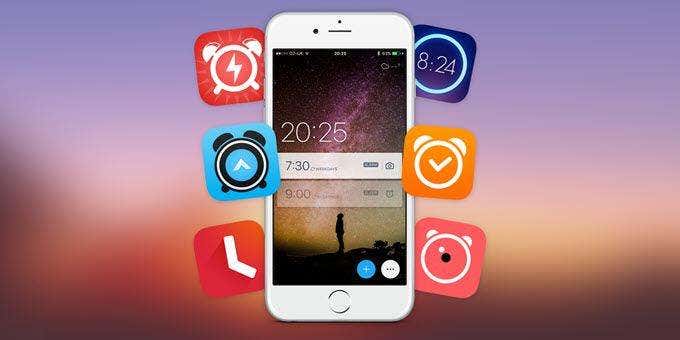
Alarmy has been called the world’s most annoying alarm app, and that’s exactly the point. CNET and Gizmodo have both flagged it for being aggressively effective, which is either a selling point or a dealbreaker depending on how bad your snooze habit is.
The core idea: you can’t dismiss the alarm until you complete a “mission.” Options include solving math problems, shaking your phone a set number of times, scanning a barcode (yes, really), or taking a photo of a specific location, like your bathroom sink. Once you’ve walked to the bathroom and taken the photo, you’re up. There’s no going back to bed after that.
Alarmy also includes sleep sounds and a sleep tracking mode, so it’s pulling double duty as a wind-down tool too. iOS 19’s Focus mode integration means Alarmy now plays nicely with your Sleep Focus schedule. It won’t fire off notifications during your wind-down window, but the alarm will still cut through when it’s time.
- Cost: Free with optional premium subscription
- Best for: Chronic snooze-button offenders
- Watch out for: Location detection can occasionally misfire. If the photo mission isn’t registering, switch to the barcode or math mission as a backup
4. Pillow, Best Apple Watch Sleep Tracker
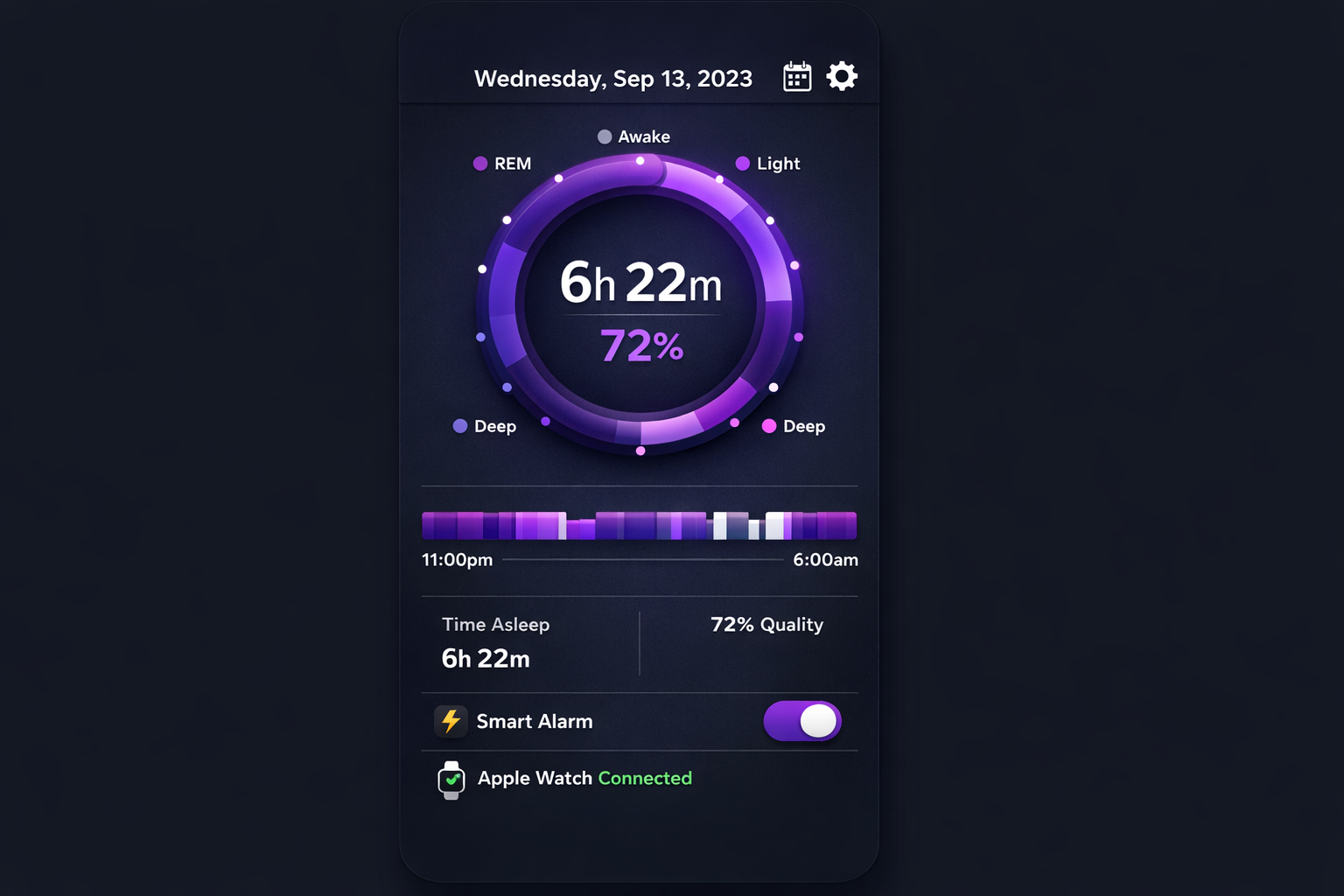
Pillow is the most polished sleep tracker in the App Store if you own an Apple Watch. Wear your watch to bed, open Pillow on your iPhone, and it automatically tracks your sleep stages, light, deep, and REM, using your Watch’s accelerometer and heart rate sensor. No phone placement tricks required.
The smart alarm is the standout feature. Set a window (say, 6:30–7:00am) and Pillow wakes you during your lightest sleep phase within that window. Waking from light sleep rather than deep sleep makes a noticeable difference. You feel less groggy even if you technically slept fewer minutes.
The audio recording feature that felt invasive back in 2019 is now opt-in and clearly scoped: you choose whether to enable snoring/sleep talking detection, and recordings are stored locally on your device unless you explicitly share them. That’s a meaningful improvement.
Pillow 7.x also added a tabbed home screen with trend analysis and a meditation section, though the meditation library is thin compared to dedicated apps like Calm.
- Cost: Free with Pillow Premium subscription for full history and features
- Best for: Apple Watch owners who want detailed sleep stage data
- Watch out for: Accuracy drops on shared beds if you’re using phone-only mode. The Watch is worth it here
3. Night Shift, The Built-In Fix You’re Probably Not Using Correctly
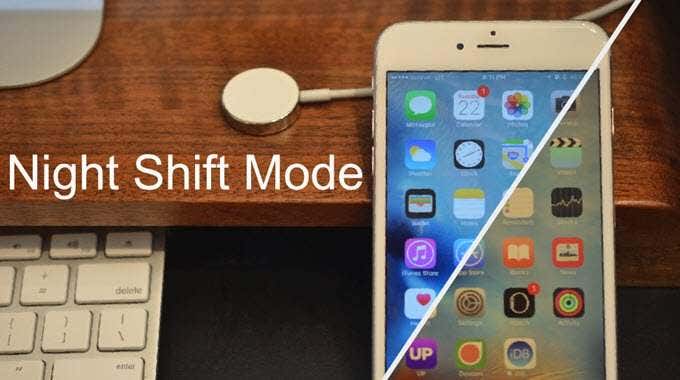
No download needed. Night Shift is baked into iOS and it does one thing: shifts your screen’s color temperature toward warmer tones after a time you set. Blue light suppresses melatonin production. Your brain reads a bright blue-white screen as “it’s daytime,” which makes falling asleep harder. Warmer tones reduce that effect.
To set it up, go to Settings > Display & Brightness > Night Shift. Enable the scheduled toggle, set your bedtime window, and drag the color temperature slider toward “More Warm.” Most people leave it at the default (middle of the scale) and wonder why it doesn’t seem to do much. Push it further toward warm for a real effect.
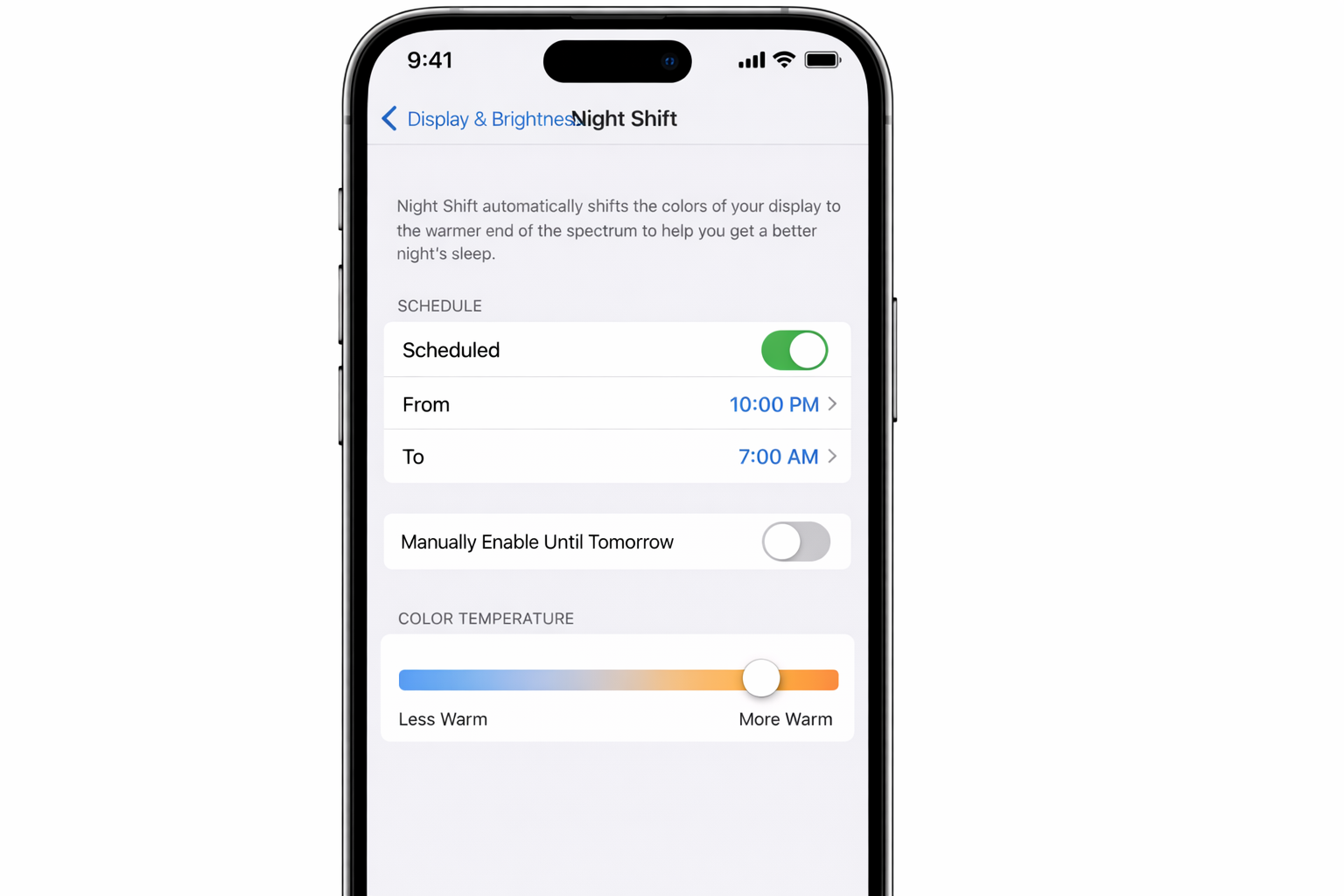
Night Shift won’t fix a bad sleep schedule on its own, and it’s not a substitute for just putting your phone down. But as a passive background setting that requires zero ongoing effort, it’s worth having on.
- Cost: Free, it’s built into iOS
- Best for: Anyone who uses their phone in the hour before bed
- Watch out for: Night Shift doesn’t reduce screen brightness, just color temperature. Pair it with auto-brightness or manual dimming for better results
2. Calm, Best for Falling Asleep
Sleep Pillow (the white noise app from the original version of this article) has faded into obscurity, largely superseded by apps with deeper feature sets. Calm is the current best-in-class for the wind-down side of sleep.
The Sleep Stories feature is genuinely effective. These are narrated stories designed to bore your brain into sleep in the best possible way. The audio quality is excellent, the voice talent is good, and there are hundreds of options including stories for kids. Calm also has guided breathing exercises, body scans, and soundscapes that rival what dedicated white noise apps offer.
The free tier gives you access to a rotating selection of content. The full library requires a Calm Premium subscription, which is priced around $70/year. That’s not cheap, but if you’re someone who struggles to wind down regularly, it pays for itself quickly compared to alternatives.
- Cost: Free tier available; Calm Premium ~$70/year
- Best for: People who struggle to quiet a racing mind at bedtime
- Watch out for: The paywall is aggressive. A lot of the best Sleep Stories are premium-only. The free tier is a good trial but limited long-term
1. Apple Sleep (Built-In), Underrated and Completely Free
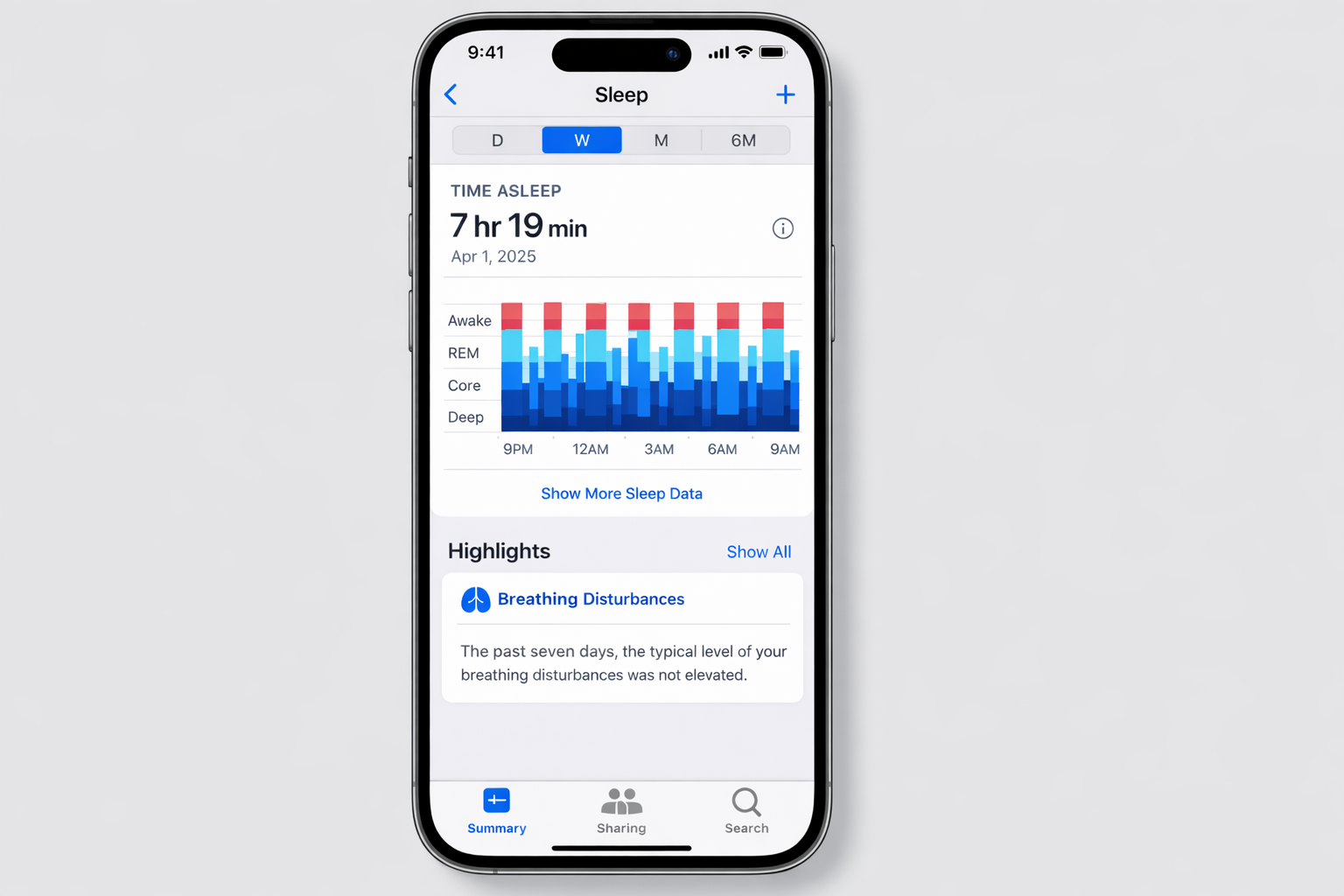
The best sleep app on your iPhone is already there. Apple’s native Sleep feature, spread across the Health app, the Clock app, and watchOS, has quietly become one of the most capable sleep tools available, and most people barely use it.
Here’s what it actually does: set a sleep schedule in the Health app (or via Clock > Sleep), and iOS activates Sleep Focus automatically at your wind-down time. That dims your lock screen, silences most notifications, and surfaces only your chosen alarm. If you wear an Apple Watch Series 8 or later to bed, it tracks sleep stages, light, deep, REM, and awake time, and surfaces the data in the Health app with weekly and monthly trends.
To get started:
- Open the Health app and tap Browse > Sleep
- Tap Get Started under “Set Up Sleep” and follow the prompts to set your sleep goal and schedule
- Enable Sleep Focus when prompted, as this is what silences your phone at bedtime
- If you have an Apple Watch, wear it to bed. sleep tracking starts automatically
- Check your sleep data each morning in the Health app under Browse > Sleep
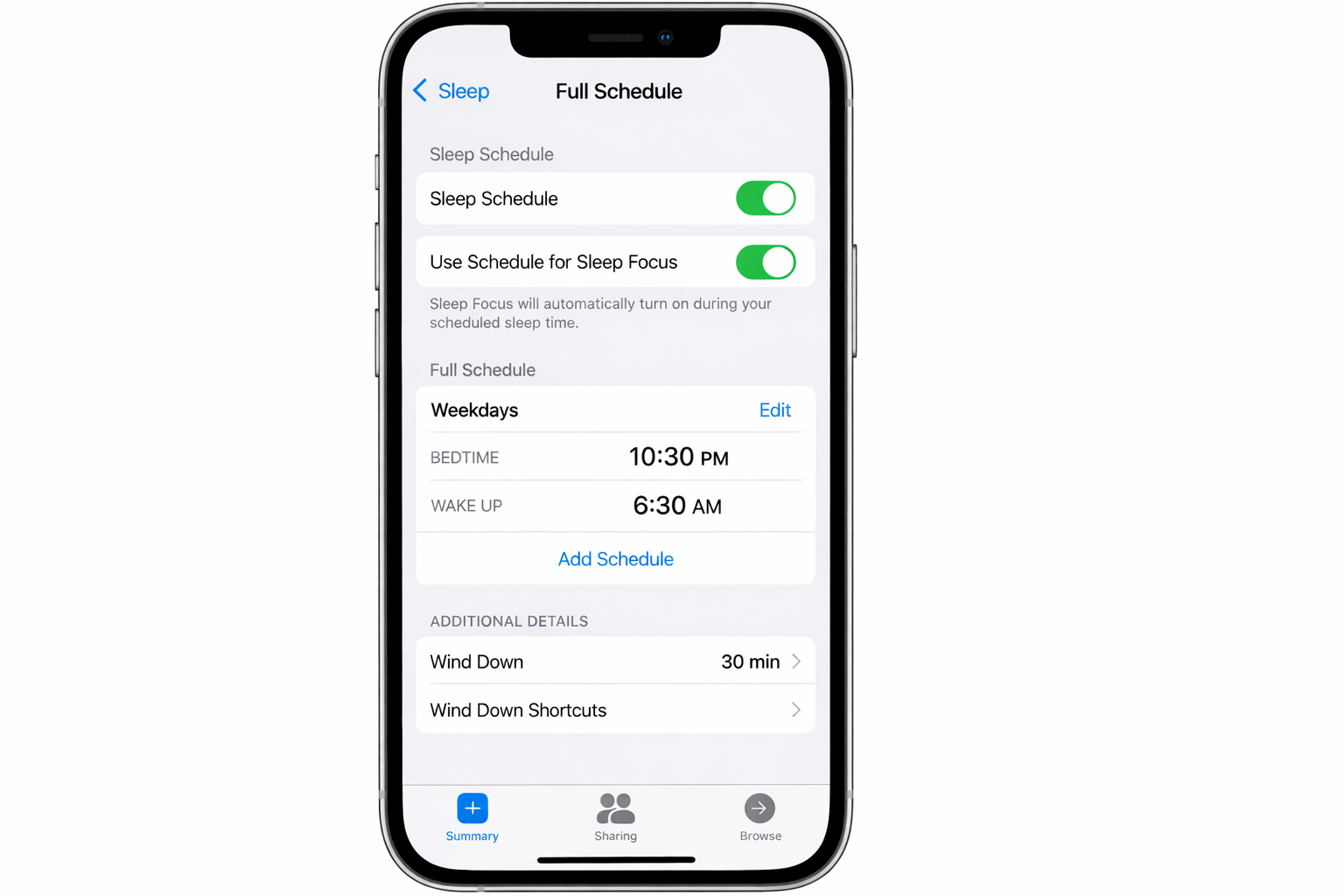
The wind-down feature is worth enabling. Set it for 30 minutes before your bedtime, and iOS will remind you to start wrapping up. It’s a gentle nudge that’s more effective than it sounds once you’re used to it.
The one limitation: Apple Watch Series 7 and older produces less granular stage data. If you’re on an older Watch and want detailed REM/deep breakdowns, AutoSleep (~$5, one-time) is worth adding, as it extracts more from older hardware than the native app does.
- Cost: Free, built into iOS and watchOS
- Best for: Anyone in the Apple ecosystem who wants a no-fuss sleep system
- Watch out for: Sleep tracking requires wearing your Apple Watch to bed. If you charge it overnight, you’ll need to adjust your charging habits
Quick Comparison
| App | Best For | Cost | Apple Watch? |
|---|---|---|---|
| Apple Sleep | Complete sleep system, free | Free | Yes (required for stages) |
| Calm | Wind-down, sleep stories | Free / ~$70/yr | No |
| Night Shift | Passive blue light reduction | Free | N/A |
| Pillow | Detailed Watch-based tracking | Free / Premium | Yes (recommended) |
| Alarmy | Forcing yourself out of bed | Free / Premium | No |
Where to Start
If you haven’t set up Apple’s native Sleep feature yet, do that first. It takes five minutes and costs nothing. Add Night Shift while you’re in Settings. Those two changes alone will make a difference for most people.
If you’re still struggling to fall asleep after that, try Calm’s free tier for a week. If the snooze button is the real problem, Alarmy is a solid choice, annoying by design, but effective.
Sleep quality is personal, and none of these apps are magic. But they’re all genuinely useful tools, and the best ones here are free. Worth trying before you reach for melatonin gummies.